

- What Is Chyawanprash?
- The Rasayana Philosophy: More Than an Immunity Booster
- Key Ingredients and Their Classical Functions
- Chyawanprash and Immunity: What the Classical Texts Actually Say
- Longevity: Chyawanprash as a Jara-Nashaka Formula
- How to Take Chyawanprash: Classical Guidance
- Classical vs. Commercial Chyawanprash: What to Watch For
- Chyawanprash in the Context of Yoga Practice
- A Note for Practitioners Working with Specific Populations
- FAQs
There is a preparation that has been made in Indian households for over a thousand years, prescribed by vaidyas long before the word "supplement" existed, and still recommended today by Ayurvedic practitioners for everyone from growing children to aging adults. That preparation is Chyawanprash.
If you have ever wondered why this dark, jam-like formula has endured while so many wellness trends have faded, the answer lies not in marketing but in the depth of its classical design. This article unpacks what Chyawanprash actually is, what the rasayana philosophy behind it means, and why its role in immunity and longevity deserves serious attention.
What Is Chyawanprash?
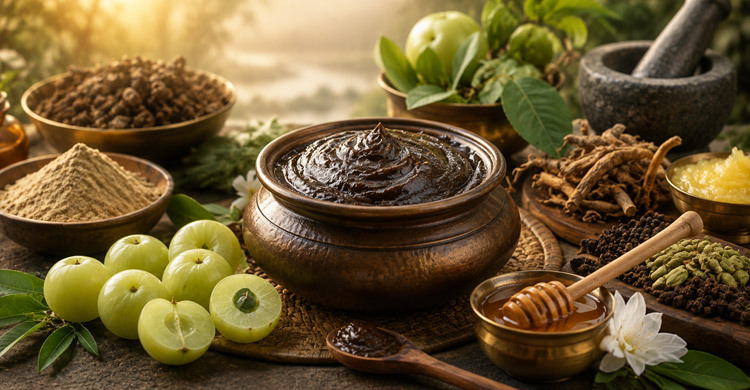
Chyawanprash is a classical Ayurvedic formulation classified as a rasayana — a preparation intended to nourish, rebuild, and extend the quality of life. The name comes from the sage Chyawan, to whom the formula is attributed in ancient texts including the Charaka Samhita. According to tradition, it was developed to restore his youth and vitality.
At its heart is Amalaki (Emblica officinalis), commonly known as Indian gooseberry or amla. Around this central ingredient, classical formulations incorporate anywhere from 35 to 50 additional herbs and spices, along with clarified butter (ghee), sesame oil, and honey. Each ingredient plays a specific role within the Ayurvedic framework of the three doshas and the seven dhatus (bodily tissues).
What makes this formula remarkable is not any single ingredient but the intelligence of the whole preparation. Ayurvedic physicians describe this as samyoga — the principle that combined substances act differently, and often more powerfully, than their isolated parts.
The Rasayana Philosophy: More Than an Immunity Booster
To understand Chyawanprash properly, you first need to understand what rasayana actually means. The word comes from two roots: rasa (essence, the first and most refined dhatu) and ayana (path or channel). A rasayana is literally a preparation that nourishes the path of rasa through the body.
Rasayana therapy is one of the eight classical branches of Ayurveda. Its goals are specific: delay aging, sharpen the mind, strengthen the sense organs, increase vitality, and improve resistance to disease. These are not vague wellness claims. Classical texts describe rasayana outcomes in terms of ojas — the refined essence produced when all seven dhatus are properly nourished and the digestive fire (agni) is functioning well.
Chyawanprash is considered a kamya rasayana, meaning it is suitable for regular use by most people across age groups, not only those recovering from illness. That distinction matters. It separates Chyawanprash from other rasayanas prescribed only under specific clinical conditions.
The hellomyyoga blog explores this framework more deeply in its piece on how rasayana practices help us rejuvenate and rebuild — worth reading alongside this article for the broader Ayurvedic context.
Key Ingredients and Their Classical Functions
Amalaki: The Anchor of the Formula
Amalaki is the undisputed heart of Chyawanprash and one of the most studied plants in Ayurvedic medicine. It is one of the three fruits in Triphala and is classified as carrying five of the six tastes (all except salty), making it unusually complete in its action on the body.
Yes, Amalaki is rich in Vitamin C and polyphenols — but reducing it to a Vitamin C source misses the point entirely. In Ayurvedic terms, it is a tridoshic herb, meaning it balances all three doshas. It is specifically indicated for strengthening ojas, improving digestion, and supporting the respiratory tract.
Ashwagandha and Bala
These two herbs give the formula its balya (strength-giving) character. Ashwagandha is widely known in modern terminology as an adaptogen, though Ayurveda describes its action more precisely: building bala (strength) in the muscles, nerves, and reproductive tissues. Bala (Sida cordifolia) similarly supports the nervous system and is considered deeply nourishing to the muscle tissue (mamsa dhatu).
Pippali and Cardamom
These warming spices function as anupana carriers — they help the formula penetrate the deeper tissues and improve bioavailability. Pippali (long pepper) is particularly valued for its action on the respiratory system and its ability to kindle agni without aggravating Pitta.
Ghee and Sesame Oil
The fat base of Chyawanprash is not incidental. In Ayurveda, fats act as yogavahi substances — they carry the properties of whatever they are combined with into the deeper tissues. Without this fat base, many of the herbal actives simply would not reach the dhatus they are meant to nourish.
Honey
Added only after the preparation cools, honey is also considered yogavahi in Ayurveda. It is never heated in classical formulations because the texts describe heated honey as producing a toxic effect on the channels. This is why authentic preparations always add honey last — and why it matters when choosing a commercial product.
Chyawanprash and Immunity: What the Classical Texts Actually Say
"Immunity" is a modern biomedical concept, but the Ayurvedic framework it maps onto is vyadhikshamatva — the body's capacity to resist disease and recover from it. This capacity depends on the strength of ojas and the clarity of the srotas (channels).
Chyawanprash addresses vyadhikshamatva through several mechanisms in the classical model:
- Nourishing ojas through the combined action of rasayana herbs
- Supporting the respiratory tract through Amalaki, Pippali, and Vasa (Adhatoda vasica), which is included in many classical versions
- Strengthening agni so the body processes food and experience efficiently, reducing the accumulation of ama (unprocessed residue)
- Clearing the srotas through herbs with a scraping (lekhana) or channel-opening (sroto-shodhana) action
This is why Chyawanprash has traditionally been recommended during seasonal transitions — particularly the shift from monsoon to autumn, when Vata increases and the respiratory system becomes more vulnerable.
The hellomyyoga blog's article on how to balance and empower immunity covers the broader Ayurvedic approach to immune resilience, including dietary and lifestyle practices that complement rasayana use.
Longevity: Chyawanprash as a Jara-Nashaka Formula
Jara means aging in Sanskrit. Nashaka means that which counteracts or destroys. Classical texts classify Chyawanprash explicitly as a jara-nashaka preparation — one that addresses the natural process of tissue degeneration over time.
This is not a claim about reversing biological age. The Ayurvedic understanding of longevity is more nuanced than that. It focuses on the quality of the tissues (sara), the clarity of the mind (sattva), and the preservation of the sense organs (indriya prasada). Chyawanprash is said to support all three.
For practitioners working with aging populations, this classical framing is directly relevant. Geriatric Ayurveda recognises that Vata dosha increases naturally with age, leading to dryness, lightness, and degeneration in the tissues. Chyawanprash, with its unctuous (snigdha) and heavy (guru) qualities, is considered a natural counterbalance to this Vata increase.
This is why Ayurvedic practitioners often recommend it as a baseline support for older adults — not as a cure for specific conditions, but as a daily rasayana that maintains tissue integrity over time.
How to Take Chyawanprash: Classical Guidance
Classical texts recommend Chyawanprash in the morning on an empty stomach, followed by warm milk. The dose in most classical references is one to two teaspoons for adults.
A few practical notes grounded in Ayurvedic principles:
- Avoid cold water or cold milk. The warming spices in the formula require a warm medium to work properly.
- Consistency matters more than quantity. Rasayana therapy works cumulatively over weeks and months, not acutely in a single dose.
- Adjust for season and constitution. In summer, some practitioners reduce the dose slightly or take it with coconut milk rather than cow's milk to avoid aggravating Pitta. In winter, it is considered ideal as given.
- Diabetics and those with high Ama should consult a vaidya. The honey and sugar content in commercial preparations can be a concern. Some classical preparations use raw cane sugar (sharkara), considered less aggravating than refined sugar in Ayurveda, but individual guidance is important.
Classical vs. Commercial Chyawanprash: What to Watch For
The classical formula described in the Charaka Samhita and Ashtanga Hridayam is specific. Commercial preparations vary significantly — in herb count, the quality of Amalaki used, whether honey is added cold or heated during processing, and the ratio of ghee to oil.
When choosing a preparation, look for:
- Amalaki listed as the primary ingredient, not as one of many equal components
- Ghee and sesame oil in the base, not vegetable oil substitutes
- Honey added cold (some manufacturers specify this)
- No artificial preservatives or synthetic Vitamin C added as a substitute for real Amalaki
Traditional preparations from established Ayurvedic pharmacies that follow classical texts tend to be far more reliable than mass-market versions optimised for sweetness and shelf life.
Chyawanprash in the Context of Yoga Practice
For yoga practitioners, Chyawanprash fits naturally within the broader framework of dinacharya (daily routine) and ritucharya (seasonal routine). Ayurveda and yoga are sister sciences, and the classical texts treat them as complementary paths toward the same goal: a body and mind clear enough to support sustained practice and awareness.
Rasayana therapy is described in classical texts as most effective when paired with ethical conduct (sadvritta), appropriate sleep, and regular practice. This is not incidental. The Ayurvedic understanding is that the tissues can only absorb and hold the nourishment a rasayana offers when the channels are clear and the lifestyle is supportive.
If you are interested in how Ayurvedic principles integrate with yoga practice at a deeper level, the hellomyyoga blog covers this connection across multiple articles — including an accessible exploration of the science and benefits of chanting as a complementary practice for clearing the subtle channels.
A Note for Practitioners Working with Specific Populations
If you work with women in perimenopause or postmenopause, Chyawanprash is particularly worth understanding. Classical texts describe this life phase as a period of increasing Vata and decreasing ojas — exactly the conditions a rasayana is designed to address. The hellomyyoga blog's article drawing on medical research on health issues in middle-aged women provides useful context for understanding this transition from both Ayurvedic and clinical perspectives.
For those working with older adults or people recovering from illness, understanding rasayana therapy as a category gives you a more complete vocabulary for discussing supportive practices alongside your yoga instruction.
FAQs
What is Chyawanprash and why is it called a rasayana?
Chyawanprash is a classical Ayurvedic herbal preparation made primarily from Amalaki (Indian gooseberry) combined with dozens of herbs, ghee, sesame oil, and honey. It is classified as a rasayana because its purpose is to nourish the body's tissues at a deep level, support vitality, and slow the effects of aging — the defining goals of the rasayana branch of Ayurveda.
What are the main chyawanprash benefits according to Ayurveda?
Classical texts describe its benefits as strengthening ojas (vital essence), supporting the respiratory system, improving digestion, nourishing the seven dhatus (bodily tissues), and building resistance to disease (vyadhikshamatva). It is also considered a jara-nashaka formula, meaning it counteracts the degenerative effects of aging.
When is the best time to take Chyawanprash?
The classical recommendation is in the morning on an empty stomach, followed by warm milk. Consistency over weeks and months is considered more important than exact timing or dose.
Can people with diabetes take Chyawanprash?
Commercial preparations often contain honey and sugar, which can raise blood glucose. People with diabetes or high Ama should consult an Ayurvedic practitioner before using Chyawanprash regularly. Some preparations use lower-glycemic sweeteners or reduced sugar ratios that may be more appropriate.
How does Chyawanprash support immunity?
In Ayurvedic terms, it supports vyadhikshamatva by nourishing ojas, clearing the srotas (channels), strengthening agni (digestive fire), and reducing ama (unprocessed residue). These actions collectively improve the body's capacity to resist and recover from illness, particularly respiratory infections.
Is Chyawanprash suitable for all age groups?
Yes. As a kamya rasayana, it is appropriate for general use across age groups — from children to older adults. Dosage and the medium used (milk, water, or other) may vary by age, constitution, and season.
How is Chyawanprash different from a standard multivitamin or supplement?
A multivitamin delivers isolated nutrients. Chyawanprash is a whole-food preparation built around the Ayurvedic principle of samyoga, where the combined action of all ingredients is greater than any individual component. Its fat base also acts as a carrier to help the formula reach the deeper tissues — something isolated supplements do not address.
Chyawanprash is not a trend. It is a formula refined over centuries by practitioners who understood the body as a system of tissues, channels, and forces requiring ongoing nourishment — not occasional intervention. Whether you take it yourself or discuss it with students, understanding its classical logic makes you a more grounded and informed practitioner.
For deeper exploration of Ayurvedic principles and how they integrate with yoga practice, the hellomyyoga blog and its courses designed by doctors and vaidyas are a natural place to continue. Explore what is available at hellomyyoga.com.