

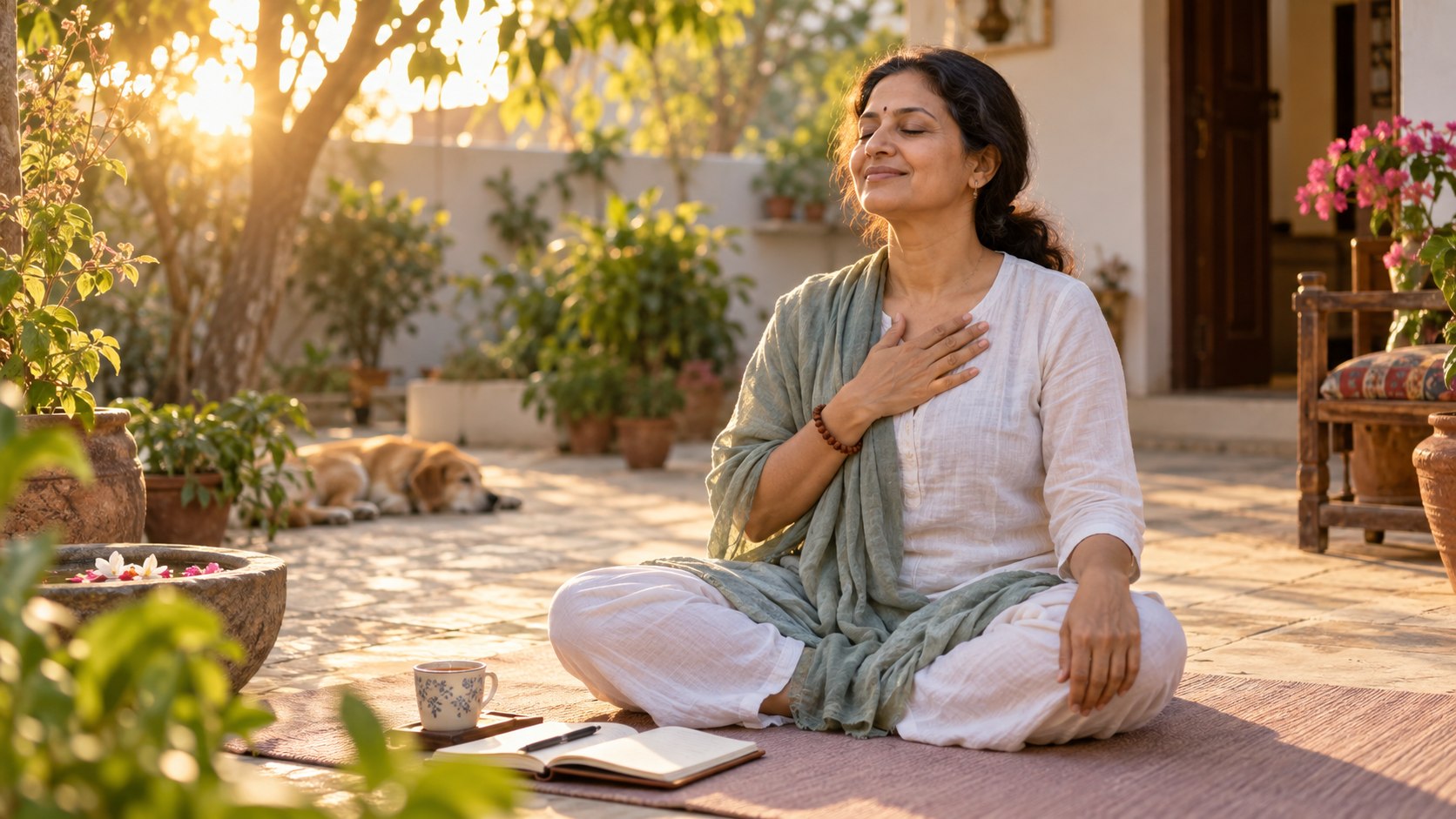
You practise every morning. You eat well, sleep on time, breathe consciously and teach others to do the same. And then your back gives way, your thyroid acts up, your cycle goes off or a report comes back with a number you did not expect. The first thought is not “I need a doctor”. It is “What did I do wrong?”
THE PROBLEM: THE HIDDEN GUILT OF THE HEALTHY PERSON
Many yoga practitioners and teachers carry an unspoken belief: if I live well, I should not fall ill. So when the body struggles, they feel shame, doubt and loss of motivation.
- “If yoga works, why am I in pain?”
- “How can I teach this when I have the same problem?”
- “Maybe my practice is not good enough.”
- “I should be able to fix this myself.”
Researchers who study long-term illness describe a feeling called health-related guilt, a gap between how we are and how we think we ought to be. Writers in the yoga world have described the same thing: shame when yoga teachers fall ill, as if illness were a moral failure.
It is not a failure. Illness has many causes: genes, age, hormones, infections, environment, injury, stress, plain chance. A healthy routine lowers many risks. It does not remove them all, and it is not a promise that nothing will ever go wrong.
WHAT THE TRADITION ALREADY TEACHES
Yoga never asked for a perfect body. It asks for awareness, honesty and steadiness. Ayurveda too sees the body as always changing: doshas shift with age, season and life stage. It does not say a good practitioner never meets imbalance. It says notice early, respond wisely and seek the right care.
Reaching out for help is not a break from the path. It is part of it. A teacher who sees a doctor, an Ayurvedic physician or a therapist, and then says so honestly, teaches something powerful: that wellbeing includes asking for support.
HOW TO WORK WITH SELF-DOUBT
Studies on self-compassion in people living with medical conditions link it with lower anxiety, depression and stress, and with healthier habits. That does not mean self-compassion treats illness. It means that kindness toward yourself is a better partner for recovery than blame.
- Name the thought. “I am feeling guilty that my body is struggling” is easier to manage than a vague sense of failure.
- Separate your worth from your health. You are not a better or worse person based on a report or a symptom.
- Treat yourself as you would treat a student with the same problem. What would you tell her? Tell yourself the same.
- Stay with your practice, but adjust it. A gentler, restorative or breath-led practice is still yoga. Rest is also part of the practice.
- Keep your routine for what it does well: it supports sleep, mood, strength, calm and resilience, even if it does not prevent every problem.
- Talk to peers. You will find that many teachers and students have faced the same.
- Do not hide it from your students if you feel ready to share. Honesty builds trust.
WHEN TO REACH OUT, AND WHY IT IS PREVENTION
- Notice changes that last: ongoing pain, unusual tiredness, changes in cycle, weight, sleep or mood, new lumps, bleeding, breathlessness or anything that worries you. Do not wait for it to “settle” or to be “fixed by practice”.
- Early help is often simpler. Many conditions are easier to manage when they are found sooner. The World Health Organization describes early detection as a form of prevention.
- Use screening that matches your age, family history and risk, and ask your doctor what is advised for you. Evidence for broad “check everything” health checks in healthy people is mixed, so targeted advice is more useful than a long list of tests.
- Combine, don’t compete. Medical care, Ayurvedic guidance and yoga can work side by side. Tell each professional about the others, and follow a qualified practitioner for herbs, medicines and treatments.
- Ask your teacher or therapist to work with your doctor’s advice, not against it.
- Go earlier than you think you need to. Needing help is not proof that your regime failed.
LOOKING AHEAD
A healthy regime is a foundation, not a shield. The strongest practitioners are not the ones who never struggle. They are the ones who notice, ask and keep going with kindness. hellomyyoga offers programs on its website for students and teachers that bring yoga and Ayurveda together with an understanding of when professional help is needed.
A NOTE
This article is for education and is not medical advice. If you have symptoms that worry you, please speak to a doctor or qualified health professional.