

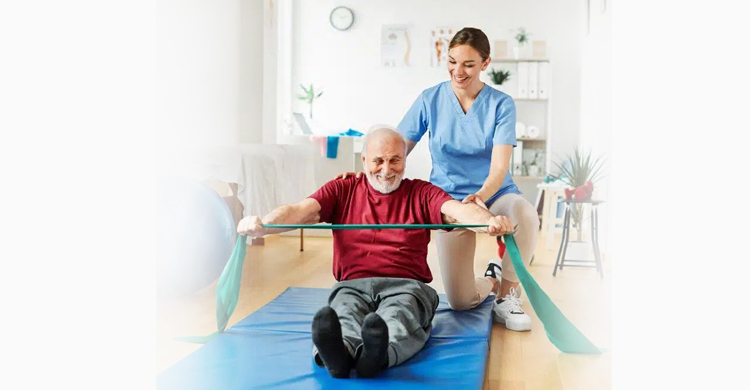
- Why Geriatric Yoga Deserves Its Own Certification
- What the hellomyyoga Geriatric Yoga Care Training Covers
- The Hybrid Format: How the Training Actually Works
- Who This Training Is For
- Career Outcomes: Where This Specialisation Takes You
- What Sets This Training Apart From General Yoga Certifications
- FAQs
- Take the Next Step
Most yoga teacher training programs were never designed with elderly bodies in mind.
They cover alignment, sequencing, and philosophy. They prepare you to teach a room full of healthy adults in their thirties. But if a 72-year-old woman with osteoporosis, a replaced hip, and early-stage dementia walks into your class, a standard 200-hour training gives you almost nothing to work with.
That gap is real. And it is growing.
India's population over 60 is expanding faster than at any previous point in the country's history. Globally, the demand for qualified instructors who can work safely and meaningfully with older adults is rising alongside it. If you are a yoga teacher thinking about where your career goes next, geriatric yoga teacher training is one of the most purposeful and professionally distinct paths you can take in 2026.
This guide covers what the training actually involves, who it is for, what the curriculum looks like, how the hybrid format works, and what kind of career it opens.
Why Geriatric Yoga Deserves Its Own Certification
Teaching yoga to elderly practitioners is not the same as teaching a gentler version of a regular class. It requires a fundamentally different kind of knowledge.
Older bodies carry decades of accumulated conditions: joint degeneration, cardiovascular changes, reduced bone density, neurological shifts, grief, isolation, and sometimes cognitive decline. Vata dosha — the Ayurvedic governing principle of movement and the nervous system — tends to increase with age, bringing dryness, instability, and anxiety. A teacher who understands this can design a practice that genuinely supports an ageing body. One who does not may cause harm without realising it.
The clinical dimension matters. So does the emotional one. Elderly practitioners often come to yoga after a health crisis, a loss, or a doctor's recommendation. They are not there to advance their practice. They are there to feel safer in their own bodies. That requires a teacher trained to meet that specific need.
Standard yoga certifications do not cover this. Neither do most general wellness platforms. The specialisation exists precisely because mainstream yoga education has largely left this population unaddressed.
What the hellomyyoga Geriatric Yoga Care Training Covers
hellomyyoga's Geriatric Yoga Care teacher training is one of three clinically focused specialisations on the platform, alongside Prenatal and Postnatal Yoga and Cancer Survivor Rehabilitation Yoga. It is designed by doctors, vaidyas, and yoga chikitsa acharyas (yoga therapy masters) with decades of clinical and traditional experience.
This is not a program assembled by fitness instructors or wellness generalists. The faculty brings genuine medical and Ayurvedic depth, and that shapes every module.
Curriculum Areas You Can Expect to Study
While the full curriculum is detailed on the platform at hellomyyoga.com, the training is built around several interconnected areas:
Anatomy and physiology of ageing. You will study how the musculoskeletal, cardiovascular, and nervous systems change with age — and what those changes mean for safe movement. Conditions like osteoarthritis, osteoporosis, Parkinson's disease, and post-surgical recovery are not abstract topics here. They are central to the curriculum.
Ayurvedic understanding of ageing. The Ayurvedic framework treats ageing as a natural progression through the Vata stage of life. Understanding this gives you a language and a set of tools that purely anatomical training cannot offer. It shapes how you approach breath, rhythm, warmth, and grounding in your sequences. The hellomyyoga blog post on Rasayana and rejuvenation offers a useful introduction to how Ayurveda thinks about rebuilding vitality across the lifespan.
Therapeutic asana and pranayama for elderly practitioners. You will learn which practices support stability, circulation, and cognitive engagement — and which carry risk for specific conditions. Modifications, props, and sequencing logic for chair yoga, floor-based practice, and standing work are all covered.
Psychological and emotional dimensions of ageing. Loneliness, grief, fear of falling, and loss of independence are part of the reality many of your students will carry. The training addresses how to hold space for this with sensitivity and skill. hellomyyoga's longstanding work on managing psychological health reflects how seriously the platform takes this dimension of care.
Contraindications and safety protocols. You will learn to assess what is appropriate for an individual, when to refer to a medical professional, and how to document and adapt your teaching for specific health conditions.
Practical teaching methodology. How you communicate with elderly students, how you structure a session, how you build trust over time — these are teachable skills, and the program treats them as such.
The Hybrid Format: How the Training Actually Works
hellomyyoga's teacher training programs use a hybrid model that combines self-study with live Zoom sessions. This structure is deliberate.
Self-study modules let you absorb theoretical content at your own pace, revisit complex material, and integrate learning between sessions. The live Zoom component is where the training comes alive: direct interaction with faculty, case discussions, supervised practice teaching, and the kind of nuanced guidance that pre-recorded content simply cannot replicate.
This is not a passive video library you work through alone. The live sessions create accountability, community, and the experience of genuinely learning from a teacher.
The training is priced between 40,000 and 50,000 rupees as a one-time purchase. No subscription. No recurring fees. You invest once in a certification that belongs to you.
For instructors outside India, the online format removes the need to travel. For those within India, it removes the need to relocate. The hybrid structure makes serious, clinically grounded training genuinely accessible — wherever you are.
Who This Training Is For
This certification is designed for yoga instructors who are already teaching and want to specialise. It is not an introductory program for beginners.
You are a good candidate if:
- You hold a foundational yoga teacher training certification and want to deepen your clinical knowledge
- You are working with, or want to work with, elderly populations in community centres, hospitals, care homes, or private settings
- You have a personal connection to ageing — through family or your own health journey — and want to bring that understanding into your teaching
- You want a credential that distinguishes you in a field where most instructors hold the same general training
- You are drawn to the Ayurvedic framework and want to apply it in a therapeutic context
Conditions like knee osteoarthritis are common among the elderly students you will encounter. The hellomyyoga interview on healing knee osteoarthritis with Dr Vineeta Ketkar gives a clear sense of the clinical depth and practical orientation the faculty brings to these topics.
Career Outcomes: Where This Specialisation Takes You
Geriatric yoga is not a niche. It is an emerging field with serious professional demand.
Qualified instructors with geriatric yoga teacher training can work in:
- Senior living communities and care homes, where structured yoga programs are increasingly recognised as part of holistic resident care
- Hospitals and rehabilitation centres, particularly in post-surgical or chronic disease management contexts
- Private practice, working one-on-one with elderly clients referred by physiotherapists, geriatricians, or family physicians
- Community wellness programs, including government and NGO-led initiatives targeting older adults
- Online teaching, where elderly practitioners who cannot travel represent an underserved and growing audience
The combination of Ayurvedic grounding, clinical knowledge, and practical teaching methodology makes hellomyyoga-trained instructors distinctly qualified for these settings. The platform's Yoga Teacher and Guru Directory for India also gives certified instructors a place to be found by students and organisations looking for qualified professionals.
What Sets This Training Apart From General Yoga Certifications
Most 200-hour teacher training programs — whether offered through online platforms or in-person studios — are built around a generalist model. They prepare you to teach yoga broadly. They do not prepare you to work with a population that has specific, complex, and sometimes urgent health needs.
hellomyyoga's Geriatric Yoga Care certification is built around a single population and a single purpose. The faculty are doctors and Ayurvedic practitioners, not fitness professionals. The curriculum is clinical in depth and traditional in grounding. Live interaction with faculty is built into the format, not offered as an optional add-on.
Ancient wisdom for modern living is not a slogan here. It describes exactly what the training does: it takes a body of traditional knowledge about ageing, movement, and healing and makes it directly applicable to the real conditions your students are living with today.
FAQs
Do I need prior yoga teacher training to enrol in the Geriatric Yoga Care certification?
Yes. This is a specialisation program designed for instructors who already hold a foundational yoga teacher certification. It builds on existing teaching experience rather than replacing it.
How long does the training take to complete?
The program uses a hybrid format combining self-study and live Zoom sessions. Specific duration details are available on the hellomyyoga platform at hellomyyoga.com, as timelines can vary by cohort.
Is the certification recognised for teaching in hospitals or care homes?
The certification demonstrates specialised clinical training and Ayurvedic grounding, which supports professional credibility in therapeutic settings. Recognition depends on the policies of individual institutions. Many care homes and wellness centres look for demonstrated specialisation rather than affiliation with a specific accreditation body.
What is the difference between geriatric yoga and chair yoga?
Chair yoga is one tool within geriatric yoga teaching. Geriatric yoga teacher training covers a much broader scope: Ayurvedic frameworks for ageing, anatomy and physiology of older bodies, contraindications for common conditions, the psychological dimensions of working with elderly students, and comprehensive sequencing methodology.
Can I complete the training from outside India?
Yes. The hybrid format with live Zoom sessions is designed to be accessible globally. The one-time purchase model means there are no ongoing subscription costs.
How is hellomyyoga's training different from a general online yoga platform?
hellomyyoga is not a class library or a streaming service. It is a structured education platform where every program is designed by doctors, vaidyas, and yoga chikitsa acharyas. The Geriatric Yoga Care training includes live faculty interaction, clinical depth, and Ayurvedic grounding that general platforms do not offer.
What support is available after completing the certification?
Certified instructors have access to the Mitra community forum for ongoing peer and practitioner connection, and can list themselves in the Yoga Teacher and Guru Directory for India to build their professional visibility.
Take the Next Step
The need for skilled, compassionate, clinically informed yoga teachers for elderly populations is only going to grow. If you are ready to build a teaching career that is genuinely specialised — grounded in both ancient wisdom and modern care — this is a meaningful direction to move in.
Explore the Geriatric Yoga Care teacher training and all available programs at hellomyyoga.com.